
Frieze Seoul 2026
Sep. 2-5, 2026
Coex 國際暨會議展⽰中⼼
Booth MP5
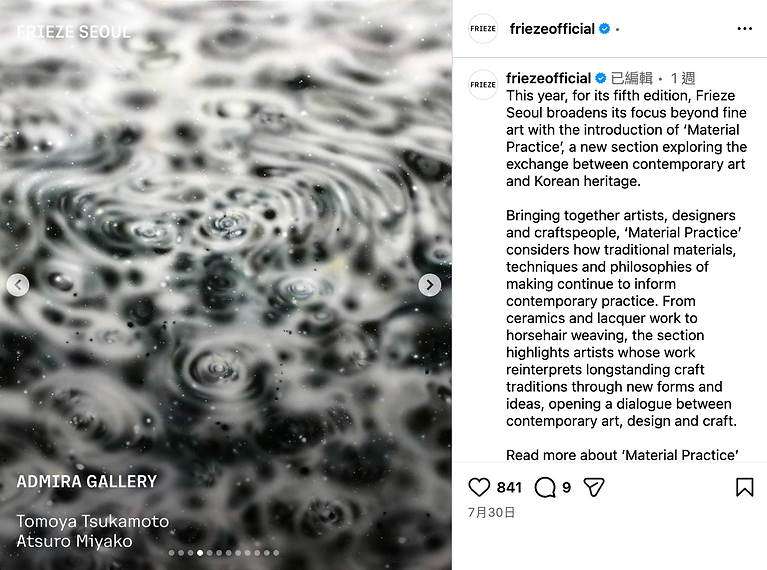
Admira Gallery公布 Frieze Seoul 2026策展計畫
塚本智也 × 都淳朗,以「光繪畫 × 光雕塑」展開材料與感知的當代藝術對話
繼日前正式宣布入選 Frieze Seoul 2026「Material Practice」策展單元後,Admira Gallery 正式公布本屆策展計畫與參展藝術家,將由兩位日本當代藝術家塚本智也(Tomoya Tsukamoto)與都淳朗(Atsuro Miyako)共同展出。(Booth:MP5)
本次策展從兩位藝術家共同關注的「光」出發,以「光繪畫 × 光雕塑」形成彼此呼應的策展關係,透過繪畫與立體作品兩種不同的創作路徑,探索光、材料與觀看經驗之間的關係。
本屆 Material Practice 由韓國獨立策展人 Hyeyoung Cho 策劃,聚焦當代藝術脈絡下的材料實踐,以及藝術家如何突破既有媒介分類,重新思考材料、作品、空間與觀看者之間的關係。Admira Gallery 則從長期對亞洲當代藝術的觀察出發,選擇兩位世代與創作背景截然不同,卻同樣以「光」拓展觀看經驗的日本藝術家進行對話。
Admira Gallery Unveils Its Curatorial Presentation for Frieze Seoul 2026
Tomoya Tsukamoto × Atsuro Miyako: “Light Painting × Light Sculpture” — A Contemporary Art Dialogue Between Material and Perception
Following the recent announcement of its selection for Material Practice at Frieze Seoul 2026, Admira Gallery is pleased to unveil its curatorial presentation and participating artists: Japanese contemporary artists Tomoya Tsukamoto and Atsuro Miyako.
Taking light as a shared point of departure, the presentation brings together “Light Painting × Light Sculpture,” creating a dialogue between two distinct artistic approaches—painting and three-dimensional practice—to explore the relationships between light, material, and the act of seeing.
Curated by Korean independent curator Hyeyoung Cho, Material Practice focuses on material-based practices within contemporary art and examines how artists move beyond conventional distinctions between media to reconsider the relationships among material, artwork, space, and viewer. Drawing on its longstanding engagement with Asian contemporary art, Admira Gallery brings together two Japanese artists of different generations and creative backgrounds whose practices converge through their exploration of light and perception.
Admira Gallery, Frieze Seoul 2026 큐레이토리얼 프로젝트 공개
츠카모토 토모야 × 미야코 아츠로, ‘빛의 회화 × 빛의 조각’으로 펼치는 물질과 지각의 현대미술적 대화
Frieze Seoul 2026의 큐레이티드 섹션 ‘Material Practice’ 참여를 공식 발표한 Admira Gallery가 이번 전시의 큐레이토리얼 프로젝트와 참여 작가를 공개한다. 일본 현대미술 작가 **츠카모토 토모야(Tomoya Tsukamoto)**와 **미야코 아츠로(Atsuro Miyako)**가 함께 참여한다.
이번 전시는 두 작가의 작업을 연결하는 공통의 출발점인 **‘빛’**에 주목한다. ‘빛의 회화 × 빛의 조각’이라는 관계를 통해 회화와 입체라는 서로 다른 창작 방식이 어떻게 빛, 물질, 그리고 보는 경험 사이의 관계를 확장하는지 탐구한다.
한국의 독립 큐레이터 **조혜영(Hyeyoung Cho)**이 기획한 Material Practice는 현대미술의 맥락에서 물질과 재료에 기반한 예술적 실천에 주목하며, 작가들이 기존 매체의 경계를 넘어 재료, 작품, 공간, 관람자 사이의 관계를 어떻게 새롭게 구성하는지를 살펴본다. Admira Gallery는 오랫동안 이어온 아시아 현대미술에 대한 관점을 바탕으로, 서로 다른 세대와 창작 배경을 지녔지만 ‘빛’을 통해 지각과 감상의 경험을 확장해 온 두 일본 작가를 하나의 공간에서 연결한다.

塚本智也 Tomoya Tsukamoto
Swimming in the Universe
2016
Acrylic, Canvas
97 x 130.3 cm (F60)
從三原⾊到黑——塚本智也的「光之繪畫」
1982年出生於日本石川縣的塚本智也,長期透過繪畫探索色彩、光影與視覺感知之間的關係。
對塚本⽽⾔,重新思考「繪畫是什麼」,始於對繪畫構成元素的不斷削減。當⾊彩被分解⾄最根源,留下的是紅、藍、⿈三原⾊;⽽三原⾊經由不同⽅式的混合與層疊,又能⽣成無數⾊彩,最終逐漸趨近於黑。
塚本以空氣噴筆(airbrush)將三原⾊化為極其細微的點,經由反覆噴疊,使原本分離的⾊彩在觀者的視覺感知中產⽣混⾊。這套⽅法同時援引印象派對光與⾊彩的探索——不以單⼀的黑描繪陰影,⽽讓⾊彩本⾝在觀看過程中⽣成光與影。
此次 Frieze Seoul 展出的《Swimming in the universe》,則進⼀步將這套⽅法推向另⼀個⽅向。作品以悠然游動於不斷流轉變化的⽔中的錦鯉為主題。不同於過往將三原⾊分別層疊,塚本在這件作品中預先將紅、藍、⿈以等量混合後進⾏描繪。鮮明的原⾊彼此混合,最終⽣成近似無彩⾊的黑——然⽽構成
這⽚黑⾊的⾊彩並未真正消失,⽽是處於⼀種「存在,卻不可⾒」的狀態。
由三原⾊⽣成的黑,也因此不同於直接使⽤黑⾊顏料所形成的黑。多重⾊彩隱藏其中,使畫⾯呈現出近似東⽅⽔墨的豐富層次;⽽游動於其中的錦鯉,則彷彿穿梭於由⾊彩⽣成的黑⾊宇宙。
塚本的創作也由此將不同繪畫傳統交織於同⼀畫⾯:⻄⽅印象派、點描與視覺混⾊對光的探索,與⽇本繪畫及源⾃中國⽔墨傳統的東⽅美學彼此相遇。在他的作品中,「光」與「黑」並⾮相互對⽴——黑反⽽是無數⾊彩匯聚後抵達的結果,⽽光則存在於⾊彩、陰影與觀看之間。
From Primary Colors to Black — Tomoya Tsukamoto’s “Light Painting”
Born in Ishikawa, Japan, in 1982, Tomoya Tsukamoto has long explored the relationships between color, light and shadow, and visual perception through painting.
For Tsukamoto, reconsidering the fundamental question of “What is painting?” begins with reducing the elements that constitute painting to their most essential forms. When color is broken down to its roots, what remains are the three primary colors̶red, blue, and yellow. Through different
processes of mixing and layering, these colors can generate countless variations, ultimately approaching black.
Using an airbrush, Tsukamoto transforms the three primary colors into extremely fine dots, repeatedly layering them so that otherwise separate colors optically blend through the viewerʼs perception. This method also draws upon the Impressionistsʼ exploration of light and color̶not
rendering shadows with a single black pigment, but allowing color itself to generate light and shadow through the act of seeing.
For Frieze Seoul, Tsukamotoʼs Swimming in the universe takes this methodology in a different direction. The painting depicts koi swimming leisurely through water in a constant state of flux. Rather than layering the three primary colors separately, as in his earlier approach, Tsukamoto pre-mixes red,
blue, and yellow in equal proportions before applying them to the canvas. As the vivid primary colors merge, they produce an achromatic black. Yet the colors that constitute this black have not disappeared; they remain present, but invisible.
This black, generated through the three primary colors, is therefore fundamentally different from one produced with black pigment alone. Multiple colors remain concealed within it, giving the surface a richness reminiscent of East Asian ink painting, while the koi swimming through it appear
to move through a dark universe generated entirely from color.
In this way, Tsukamoto brings multiple histories of painting into a single pictorial space: Western explorations of light through Impressionism, pointillism, and optical color mixing encounter Japanese painting and an East Asian aesthetic rooted in the Chinese ink-painting tradition. Within
his work, “light” and “black” are not opposites. Black becomes the destination at which countless colors converge, while light exists in the relationships among color, shadow, and perception.
삼원색에서 검정으로 ̶ 츠카모토 토모야의 ʻ빛의 회화ʼ
1982년 일본 이시카와현에서 태어난 츠카모토 토모야는 회화를 통해 색채, 빛과 그림자, 그리고 시각적 지각 사이의 관계를 지속적으로 탐구해 왔다.
츠카모토에게 “회화란 무엇인가?”라는 근본적인 질문을 다시 생각하는 과정은 회화를 구성하는요소들을 가능한 한 본질적인 형태로 덜어내는 데서 시작된다. 색채를 그 근원까지 분해하면 빨강, 파랑, 노랑의 삼원색이 남는다. 이 세 가지 색을 서로 다른 방식으로 혼합하고 중첩함으로써 수많은색채가 생성되며, 그 색들은 결국 검정에 가까워진다.
츠카모토는 에어브러시를 이용해 삼원색을 극도로 미세한 점으로 표현하고 반복적으로중첩함으로써, 서로 분리된 색들이 관람자의 시각적 지각 속에서 혼색되도록 한다. 이러한 방법은빛과 색채를 탐구했던 인상주의의 시도와도 연결된다. 그림자를 단일한 검정으로 표현하는 대신, 보는 과정 속에서 색채 자체가 빛과 그림자를 만들어내도록 하는 것이다.
이번 Frieze Seoul에서 선보이는 《Swimming in the universe》는 이러한 방법론을 또 다른방향으로 확장한 작품이다.
작품은 끊임없이 흐르고 변화하는 물속을 유유히 헤엄치는 비단잉어를 모티프로 한다. 기존의방식처럼 삼원색을 각각 중첩하는 대신, 이 작품에서 츠카모토는 빨강, 파랑, 노랑을 동일한 비율로미리 혼합한 뒤 화면에 적용한다. 선명한 원색들이 서로 섞이면서 결국 무채색에 가까운 검정을만들어내지만, 그 검정을 구성하는 색채들은 실제로 사라진 것이 아니라 ʻ존재하지만 보이지 않는ʼ 상태로 남는다.
삼원색으로 만들어진 이 검정은 검정색 물감 자체로 표현한 검정과는 다른 깊이와 표정을 지닌다.여러 색채가 그 안에 숨어 있으면서 화면에는 동양의 수묵화를 연상시키는 풍부한 층위가형성되고, 그 속을 헤엄치는 비단잉어는 마치 색채로 생성된 검은 우주를 유영하는 듯 보인다.
이를 통해 츠카모토는 서로 다른 회화의 전통을 하나의 화면 안에서 교차시킨다. 인상주의, 점묘법, 시각적 혼색을 통해 빛을 탐구해 온 서양 회화의 역사와 일본 회화, 그리고 중국 수묵화 전통에뿌리를 둔 동양적 미학이 서로 만난다. 그의 작품에서 ʻ빛ʼ과 ʻ검정ʼ은 서로 대립하는 개념이 아니다. 오히려 검정은 수많은 색채가 모여 도달하는 결과이며, 빛은 색채와 그림자, 그리고 보는 행위사이에 존재한다.

都淳朗 Atsuro Miyako
Juvenile:Positive
2026
PET / Polarizer / LED / Acrylic / Aluminum
31.9x 23.2 x 6.6 cm
將不可見的力量轉化為「光的雕塑」——都淳朗
1996年出生於日本德島縣的都淳朗,則從設計、科技與自然現象的交界展開創作。他的實踐經常從材料本身具有的物理特性出發,透過研究與實驗,將原本存在於日常之中、卻不容易被肉眼察覺的自然現象,轉化為可以被觀看與感知的作品。
都淳朗過去曾以「光彈性(Photoelasticity)」作為創作方法:當透明材料受到外力產生應力,在偏振光(Polarization)作用下形成複折射,原本不可見的力量因而轉化為鮮明的光與色彩紋理。此次於 Frieze Seoul 所呈現的創作,亦延續他對光、偏振與材料之間關係的探索,使光不再只是照亮物體的外在條件,而成為構成作品本身的重要媒介。
Transforming Invisible Forces into “Light Sculpture” — Atsuro Miyako
Born in Tokushima, Japan, in 1996, Atsuro Miyako develops his practice at the intersection of design, technology, and natural phenomena. Beginning with the physical properties of materials, he uses research and experimentation to transform phenomena that exist around us yet often remain invisible to the naked eye into experiences that can be seen and perceived.
Miyako has previously employed photoelasticity as an artistic method. When transparent materials are subjected to external stress, birefringence occurs under polarized light, transforming otherwise invisible forces into vivid patterns of light and color.
His presentation at Frieze Seoul continues this exploration of the relationships among light, polarization, and material, allowing light to move beyond its conventional role as an external condition that illuminates an object and become an integral medium of the work itself.
보이지 않는 힘을 ‘빛의 조각’으로 — 미야코 아츠로
1996년 일본 도쿠시마현에서 태어난 미야코 아츠로는 디자인, 테크놀로지, 자연현상이 교차하는 지점에서 작업을 전개한다. 그는 재료가 지닌 물리적 특성에서 출발해 연구와 실험을 거치며, 일상 속에 존재하지만 육안으로는 쉽게 인식할 수 없는 자연현상을 보고 감각할 수 있는 작품으로 전환한다.
미야코는 작업 방법 중 하나로 광탄성(Photoelasticity) 현상을 활용해 왔다. 투명한 재료에 외부의 힘이 가해져 응력이 발생하면 편광 아래에서 복굴절 현상이 나타나며, 본래 눈으로 볼 수 없었던 힘이 선명한 빛과 색채의 패턴으로 드러난다.
이번 Frieze Seoul에서 선보이는 작업 역시 빛, 편광, 재료 사이의 관계에 대한 탐구를 이어간다. 여기서 빛은 더 이상 물체를 비추기 위한 외부 조건에 머물지 않고, 작품 자체를 구성하는 중요한 매체로 작동한다.

塚本智也 Tomoya Tsukamoto
Journey of Colors -斜影の梅 1 / 2 / 3
2016
Acrylic, Canvas
45.5 x 53 cm (3 pieces)
光繪畫 × 光雕塑
一位以三原色構築光,一位以物質讓光顯現。
塚本智也從⾊彩出發,在三原⾊的分離、重疊與混合之間,讓光、影乃⾄黑⾊成為觀看過程中⽣成的視覺經驗;都淳朗則透過材料與物理現象,將原本不可⾒的⼒量轉化為可以被觀看的光。
兩種截然不同的創作方式,在同一空間中形成「光繪畫 × 光雕塑」的對話。繪畫與雕塑不再只是媒介上的分類,「光」也不再只是作品被觀看時的外在條件,而成為連結作品、空間與觀看者的共同媒介。
這樣的策展方式,也延續 Admira Gallery 長期對亞洲當代藝術的觀察。畫廊並不以繪畫、雕塑、工藝或設計等既有分類作為觀看藝術的界線,而是關注藝術家如何運用不同媒材、技術與文化背景,建立屬於當代藝術的創作語言。
Light Painting × Light Sculpture
One constructs light through primary colors; the other allows light to emerge through material.
Beginning with color, Tsukamoto uses the separation, layering, and mixing of the three primary colors to allow light, shadow, and even black to emerge as visual experiences through the act of seeing. Miyako, by contrast, uses materials and physical phenomena to transform otherwise invisible forces into visible light.
Placed within the same space, these two distinctly different artistic approaches create a dialogue between “Light Painting × Light Sculpture.” Painting and sculpture are no longer treated simply as separate media, while light becomes more than an external condition of viewing: it serves as a shared medium connecting artwork, space, and viewer.
This curatorial approach reflects Admira Gallery’s longstanding perspective on Asian contemporary art. Rather than treating painting, sculpture, craft, and design as fixed or separate categories, the gallery focuses on how artists employ diverse materials, techniques, and cultural contexts to develop new languages within contemporary art.
빛의 회화 × 빛의 조각
한 사람은 삼원색으로 빛을 구축하고, 다른 한 사람은 물질을 통해 빛을 드러낸다.
츠카모토 토모야는 색채에서 출발해 삼원색의 분리와 중첩, 혼합을 통해 빛과 그림자, 나아가검정까지도 보는 과정 속에서 생성되는 시각적 경험으로 전환한다. 반면 미야코 아츠로는 재료와물리적 현상을 통해 본래 보이지 않던 힘을 눈으로 볼 수 있는 빛으로 전환한다.
서로 다른 두 창작 방식은 하나의 공간에서 ‘빛의 회화 × 빛의 조각’이라는 대화를 만들어낸다. 회화와 조각은 더 이상 단순히 매체에 따른 분류에 머물지 않으며, ‘빛’ 역시 작품을 바라보기 위한 외부 조건을 넘어 작품, 공간, 관람자를 연결하는 공통의 매체가 된다.
이러한 큐레이토리얼 접근은 Admira Gallery가 지속적으로 탐구해 온 아시아 현대미술에 대한 관점과도 맞닿아 있다. 갤러리는 회화, 조각, 공예, 디자인 등을 서로 분리된 고정적 범주로 바라보기보다, 작가들이 다양한 재료와 기술, 문화적 배경을 통해 어떻게 현대미술의 새로운 언어를 구축하는지에 주목한다.

都淳朗 Atsuro Miyako
To Where the Waves Go:Negative
2026
PET / Polarizer / LED / Acrylic / Aluminum
31.9x 23.2 x 8.2 cm
Admira Gallery 總經理 Chad Liu 表示:「塚本智也與都淳朗來⾃不同世代與專業背景,各⾃採取相異的創作脈絡,但當我們重新觀看兩⼈的作品,會發現『光』其實成為他們彼此之間⾮常有趣的連結。塚本從最基本的三原⾊出發,讓光、影甚⾄黑⾊在觀看之中⽣成;都淳朗則透過材料與⾃然現象,讓原本不可⾒的⼒量轉化為光。我們希望這次在 Frieze Seoul,不只是展⽰兩位藝術家的作品,⽽是讓兩種截然不同的藝術語⾔,在同⼀個空間裡相互映照。」
對 Admira Gallery 而言,此次參與Frieze Seoul 2026 ,不只是一次國際藝術博覽會的展出,更是透過策展,將畫廊長期關注的亞洲當代藝術觀點帶入國際對話的實踐。從「光繪畫」到「光雕塑」,兩位藝術家以截然不同的創作路徑,最終指向同一個關於觀看的問題:當光不再只是讓作品被看見的條件,而成為構成作品本身的一部分,我們又將如何重新觀看藝術?
Admira Gallery 將於 Frieze Seoul 2026 正式呈現本次策展計畫,完整作品與展場空間將於展會期間公開。
Chad Liu, General Manager of Admira Gallery, states:
“Tomoya Tsukamoto and Atsuro Miyako come from di@erent generations and professional backgrounds, each developing a distinctly di@erent artistic practice. Yet when we look at their works together, light emerges as a fascinating connection between them. Beginning with the most fundamental primary colors, Tsukamoto allows light, shadow, and even black to emerge through the act of seeing; Miyako uses material and natural phenomena to transform invisible forces into light. At Frieze Seoul, we hope not simply to present the works of two artists, but to allow two very di@erent artistic languages to reflect and resonate
with one another within the same space.”
For Admira Gallery, participating in Frieze Seoul 2026 represents more than an appearance at an international art fair. It is an opportunity to bring the gallery’s longstanding perspective on Asian contemporary art into a broader international curatorial dialogue.
From “Light Painting” to “Light Sculpture,” the two artists ultimately arrive at a shared question about the act of seeing:When light is no longer merely the condition that allows an artwork to be seen, but becomes part of the artwork itself, how might we begin to see art differently?
Admira Gallery will present the complete curatorial project at Frieze Seoul 2026, with the full selection of works and exhibition installation to be unveiled during the fair.
Admira Gallery General Manager Chad Liu는 다음과 같이 말한다.
“츠카모토 토모야와 미야코 아츠로는 서로 다른 세대와 전문적 배경을 지니고 있으며, 각기 다른창작의 맥락을 발전시켜 왔습니다. 그러나 두 사람의 작품을 함께 바라보면 ʻ빛ʼ이 이들을 연결하는매우 흥미로운 접점이라는 사실을 발견하게 됩니다. 츠카모토는 가장 기본적인 삼원색에서 출발해 보는 행위 속에서 빛과 그림자, 나아가 검정까지 생성되도록 하고, 미야코는 재료와 자연현상을통해 보이지 않는 힘을 빛으로 전환합니다. 이번 Frieze Seoul에서는 단순히 두 작가의 작품을보여주는 데 그치지 않고, 서로 다른 두 예술 언어가 하나의 공간 안에서 서로를 비추고공명하도록 하고자 합니다.”
Admira Gallery에게 Frieze Seoul 2026 참가는 단순히 국제 아트페어에서 작품을 선보이는 것 이상의 의미를 지닌다. 갤러리가 오랫동안 주목해 온 아시아 현대미술에 대한 관점을 큐레이토리얼 실천을 통해 보다 넓은 국제적 대화 속으로 확장하는 기회이기도 하다.
‘빛의 회화’에서 ‘빛의 조각’으로 이어지는 두 작가의 서로 다른 창작 경로는 결국 ‘본다’는 행위에 관한 하나의 질문으로 수렴한다.
빛이 더 이상 작품을 보이게 하는 조건에 머물지 않고 작품 자체를 구성하는 일부가 될 때, 우리는 예술을 어떻게 새롭게 바라볼 수 있을까?
Admira Gallery는 Frieze Seoul 2026에서 이번 큐레이토리얼 프로젝트를 공식적으로 선보이며, 전체 출품작과 전시 공간은 페어 기간 중 공개할 예정이다.