
2026 Art Taichung 台中國際藝術博覽會
Booth B07
VIP PREVIEW | Jun. 4,2026, PUBLIC DAYS | Jun. 5-7, 2026
觀止堂(ADMIRA Gallery)很榮幸將於 2026 年6月參與從飯店全新轉型至展場形式的台中國際藝術博覽會(Art Taichung)。經過13年的飯店型展會拓展台中藝術收藏市場,加上臺中市立美術館已於 2025 年啟用、中國醫藥大學美術館預計於 2028 年落成,城市逐漸形成一條以「美術館聚落、文化再生與藝術生態升級」為核心的文化主線,讓藝術能量得以在城市中全面聚焦、擴張,並向亞洲延伸。這樣的文化背景,也奠定了台中藝博升級為國際級藝術博覽會的重要時機與城市條件。
觀止堂本次帶來八位台日藝術家新作共同展出,並展出新代理的台灣藝術家——李祐齊(WLL Lee)與日本藝術家都淳朗(Atsuro Miyako)全新作品!
ADMIRA Gallery is pleased to announce its participation in Art Taichung 2026, marking the fair’s transformation from a hotel-based format into a full exhibition venue. Over the past 13 years, the hotel fair model has helped expand the art-collecting scene in Taichung. With the opening of the Taichung Art Museum in 2025 and the upcoming completion of the China Medical University Museum in 2028, the city is gradually forming a cultural axis centered on “museum clusters, cultural regeneration, and the upgrading of its art ecosystem.” This development allows artistic energy to converge more clearly within the city, expand outward, and further connect with the broader Asian region. Against this backdrop, Taichung Art Fair is entering a new stage as an international art fair, supported by a strong cultural infrastructure and timing.
For this edition, ADMIRA Gallery will present new works by eight artists from Taiwan and Japan. The booth will also feature newly represented artists, including Taiwanese artist WLL Lee and Japanese artist Atsuro Miyako, showcasing their latest works for the first time.
_2026_%E7%B4%85%E9%8A%85Red%20copper_W40xH35xD25.jpeg)
李祐齊 Yu Chi Lee
POP暴龍(POP T-Rex)
2026
Copper
W40xH35xD25 cm
李祐齊目前就讀於國立臺灣藝術大學工藝設計學系,創作橫跨金工、木工、陶瓷與複合媒材。他以工藝技術為基礎,探索材料、造形與感知之間的關係,將物件轉化為承載身體經驗、心理投射與時代感知的當代造形語彙。
在李祐齊的創作中,材料並非被動的形式載體,而是推動作品生成的重要語言。金屬的冷冽與精準、木材的溫度與紋理、陶瓷的脆弱與可塑性,以及複合媒材所帶來的層次與張力,皆在他的作品中被重新組構,形成介於工藝、雕塑與當代設計之間的獨特視覺語彙。
其代表性的「POP恐龍」系列,以恐龍作為自我投射的替身,也展現出藝術家對金工語彙的細膩研究與表現。恐龍是一種從未被真正看見,卻長期存在於大眾想像之中,並容易被喜愛的形象。藝術家藉此回應個體對「被喜歡」的渴望,並在恐龍姿態中融入當代流行文化的肢體語彙,使作品與觀者產生共感連結。
在材質與色彩上,李祐齊透過氧化與斑駁的表面處理,讓恐龍呈現出時間累積的痕跡,並與其親切、可愛的外型形成衝突。這種不一致,使作品在親近與疏離、幽默與孤寂、流行圖像與時間質感之間擺盪,也展現出藝術家對材料智慧、物件敘事與當代 designart 語彙的敏銳掌握。
Yu Chi Lee is currently studying in the Department of Crafts and Design at National Taiwan University of Arts. His practice spans metalwork, woodworking, ceramics, and mixed media. Grounded in craft techniques, his work explores the relationship between material, form, and perception, transforming objects into contemporary forms that carry bodily experience, psychological projection, and reflections of the present time.
In Lee’s practice, materials are not passive carriers of form, but active languages that drive the work itself. The cold precision of metal, the warmth and texture of wood, the fragility and flexibility of ceramics, and the layered tension of mixed media are reconfigured in his works, forming a visual language that sits between craft, sculpture, and contemporary design.
One of his key series, “POP Dinosaur,” uses the figure of the dinosaur as an avatar-like projection of the self, while also demonstrating the artist’s careful study of metalworking techniques. The dinosaur is an image that has never been truly seen, yet has long existed in collective imagination and is easily perceived as friendly and lovable. Through this figure, the artist responds to the desire to be liked, embedding gestures inspired by contemporary pop culture into its form, creating a sense of emotional connection with the viewer.
In terms of material and color, Lee uses oxidation and weathered surface treatments to give the dinosaurs a sense of accumulated time, creating a contrast with their approachable and playful appearance. This tension between familiarity and distance, humor and solitude, pop imagery and temporal patina allows the works to oscillate between different states, while revealing the artist’s sensitivity to material intelligence, object-based storytelling, and contemporary design-art language.

都淳朗 Atsuro Miyako
Straight Stranger
2026
PET / Polarizer / LED / Acrylic / Aluminum
40.5×29.9×9.5cm
都淳朗1996年於德島縣出生。2021年取得千葉大學大學院融合理工學府創成工學專攻設計學程(博士前期課程)。身為跨界創作者團體 Konel 的成員,以科技來實現未來體驗之餘,也積極投入於實驗性商品開發及利用自然現象的藝術創作。主要獲獎紀錄包括:Good Design Award(優良設計獎)、TOKYO MIDTOWN AWARD 優秀獎,並獲選DESIGNART TOKYO 2024 UNDER 30 。以宏觀的製作人視野,持續進行既是設計也是藝術的創作。
《Visible Stress》是一個試圖要挑戰將不可視之「光」,藉由人類工業技術具現化的實驗系列作品。
古典藝術時期之浪漫主義的英國藝術家威廉透納(Joseph Mallord William Turner),使用半透明顏料疊加技法讓光線從顏料漸層透射,包裹在光裡的風景抽象展現;印象派藝術家如梵谷(Vincent van Gogh)創作的作品,透過他身體不同時期眼睛所能接觸到的光之粒子,表達內心的情感與生命體驗;當代藝術家如塚本智也(Tomoya Tsukamoto),以光之三原色為基礎,結合圖地反轉的東方美學,在純白畫布上折射出萬紫千紅的世界。
有了無形之光,從物體反射至人類視網膜當下才真正成像,換句話說,我們看到的事物都可視為不可視之光之具現化,但若要以人類可識別之物描繪出光之本質,又該如何是好?
《Visible Stress》應用了自然界存在的「光彈性(photoelasticity)」物理現象,並結合現有真空成型之工業技術,將真空成型時所產生的負載,以光的紋理可視化。把不可視之「光」的自然現象,加入「人力」之非自然干涉後,呈現出一種違和又讓人為之炫目的視覺幻象。透過這件作品,觀者得以欣賞因真空成型壓力而生成的光之質地。
這樣的體驗,讓人重新思考我們如何感知自己與周遭環境,並想像那些隱藏於世界之中、美麗而看不見的力量。
Atsuro Miyako (b. 1996, Tokushima, Japan) received his master’s degree (pre-doctoral program) in Design from the Graduate School of Engineering, Chiba University, Faculty of Transdisciplinary Science and Engineering, in 2021. He is a member of the cross-disciplinary creative collective Konel. While developing future-oriented experiences through technology, he also actively engages in experimental product development and artistic practices that incorporate natural phenomena.
His recognitions include the Good Design Award, the TOKYO MIDTOWN AWARD Excellence Prize, and selection for DESIGNART TOKYO 2024 UNDER 30. Working with a producer-like, macro perspective, he continues to develop practices that move fluidly between design and art.
“Visible Stress” is an experimental series that attempts to materialize the invisible phenomenon of light through human industrial technologies.
From the Romantic period, British artist J. M. W. Turner used layers of translucent paint to let light seem to pass through gradients of pigment, dissolving landscapes into atmospheric abstraction. Impressionist artists such as Vincent van Gogh captured light as perceptual particles experienced through the changing conditions of the eye and body, translating them into emotional intensity and lived experience. In contemporary practice, artists like Tomoya Tsukamoto have explored light through the system of RGB color, combined with an Eastern visual logic of figure-ground reversal, projecting a multicolored world onto a white surface.
Light itself is invisible; it only becomes visible when reflected by objects and received by the human retina. In this sense, everything we see can be understood as a manifestation of invisible light. But if we attempt to depict the essence of light using something that is perceptible to humans, what form would it take?
“Visible Stress” applies the natural physical phenomenon of photoelasticity and combines it with industrial vacuum forming techniques. The stress generated during the vacuum forming process is visualized as a texture of light. By introducing human industrial intervention into the natural behavior of light, the work produces a striking and slightly disorienting visual illusion. Through this process, viewers are able to witness a “materiality of light” generated by pressure.
This experience invites us to reconsider how we perceive ourselves and our surrounding environment, and to imagine the hidden, invisible yet beautiful forces that exist within the world.
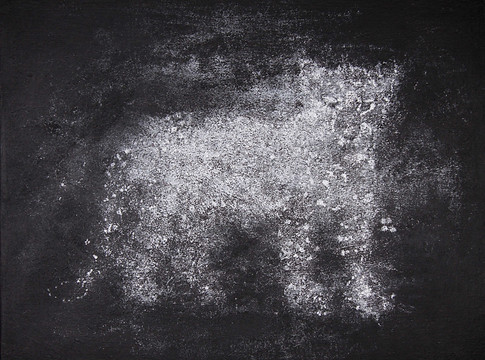
蘇修賢 Ryan Su
暴風雨|Storm
2026
Acrylic on Canvas
41x31.5cm
台灣藝術家蘇修賢的創作圍繞「斷裂」、「轉化」與「新生」之間的關係展開。他並不將破壞視為終點,而是將其視為生成的開端:事物在被拆解、鬆動與重組之後,反而浮現出新的形態與生命可能。
在 2026 年個展「break・轉化與新生」中,蘇修賢以一系列作品回應生命存在的狀態與內在結構。他所談的「break」,不只是破壞或斷裂,也是一道使新生得以發生的裂縫。作品多由黑色與白色構成,畫面彷彿宇宙初始、生命誕生前的混沌狀態。點狀、塊狀與拓印般的痕跡在畫面中堆疊、擴散,逐漸凝聚成形,又可能在下一瞬間消解為另一種生命的起點。
作品《暴風雨》延續了這樣的思考。畫面中的豹並非單純的動物形象,而是一個在劇烈破壞中仍保持凝視的存在。牠的身體彷彿由被風牽引的花草、枯葉與碎片構成,在聚集與散逸之間形成可辨識卻不穩定的生命形體。作品所關注的不是風暴本身,而是當一切正在失去穩定時,那個仍然凝視前方、在崩壞中持續維持形體意志的瞬間。
Taiwanese artist Ryan Su’’s practice revolves around the relationship between “rupture,” “transformation,” and “renewal.” Rather than treating destruction as an endpoint, he understands it as the beginning of becoming: when things are dismantled, loosened, and reconfigured, new forms and new possibilities of life begin to emerge.
In his 2026 solo exhibition break・Transformation and Renewal, Su responds to states of existence and inner structures through a series of works. Here, “break” is not simply destruction or fracture, but a crack through which renewal becomes possible. The works are often composed of black and white, evoking a primordial, almost cosmic condition—like a chaotic state before life begins. Dots, blocks, and print-like traces accumulate and disperse across the surface, gradually forming images that may solidify for a moment, only to dissolve again into another beginning of life.
The work Storm continues this line of thought. The leopard in the image is not merely an animal figure, but a presence that continues to gaze within intense rupture. Its body appears composed of wind-torn flowers, dried leaves, and scattered fragments—shifting between gathering and dispersal, forming a recognizable yet unstable life form. The work is not about the storm itself, but about the moment when everything is losing stability, and yet something continues to look forward and hold form within collapse.

衣田雅幸 Masayuki Kinuta
Cat
2026
Scraps of wool fabric
1974 年生於日本奈良縣。父親為菇類學者,自幼便對動植物與昆蟲等自然生命懷抱濃厚興趣。1993 年開始投入創作,曾與時尚品牌簽訂委託(commission)合約承接製作。2021 年,相隔 13 年後,再度以個人名義正式發表作品。
藝術家承襲自父親的敏銳觀察力,以布料為主要媒材,全手工創作各式動物形象。其選材範圍廣泛,從尾州西裝布料的樣本碎片,到古董亞麻布等皆納入創作,透過細小布片的拼接、縫合與堆疊,形塑出宛如真實生物般充滿動態張力的立體造型。
其創作可從「軟雕塑(soft sculpture)」的脈絡加以理解。衣田將布料視為可被雕塑的材質,藉由填充、縫線與結構控制,使柔軟的纖維轉化為具備體積、重量感與支撐性的立體形體。作品不僅追求外觀上的擬真,更著重於表情與氣息的捕捉——那是一種介於可愛與不可名狀之間、彷彿被瞬間定格的生命狀態。
定格瞬間的貓、目光銳利的貓頭鷹、以及散發神祕魅力的兔子……這些作品喚起人們童年時對動物所懷抱的純粹好奇與敬畏,也體現了藝術家最珍視的創作核心——以帶著難以言喻表情的「布的雕刻」,為柔軟材質賦予情感重量與雕塑性的存在。
Born in 1974 in Nara Prefecture, Japan, the artist grew up in a natural environment deeply influenced by his father, a mycologist. From an early age, he developed a strong fascination with plants, animals, and insects. He began his artistic practice in 1993 and later worked on commissioned projects for fashion brands. After a 13-year hiatus, he returned to presenting work under his own name in 2021.
Drawing on the observational sensitivity inherited from his father, the artist primarily works with fabric as his main medium, handcrafting various animal forms. His material choices are highly diverse, ranging from small fabric remnants of Bishu suit textiles to antique linen. Through processes of cutting, stitching, and layering, these fragments are assembled into three-dimensional forms that carry a sense of lifelike movement and tension.
His practice can be understood within the context of “soft sculpture.” Fabric is treated as a sculptable material: through stuffing, sewing, and structural control, soft fibers are transformed into volumetric forms with weight, presence, and support. Rather than aiming for simple realism, the works focus on capturing expression and atmosphere—a state suspended between cuteness and something ineffable, as if life itself were briefly frozen in time.
A cat caught in a moment of stillness, a sharply gazing owl, a rabbit with an enigmatic presence—these figures evoke a childhood sense of curiosity and awe toward animals. At the same time, they embody the artist’s core concern: to give emotional weight and sculptural presence to soft materials, creating “fabric sculptures” that carry subtle, indescribable expressions.
%202026%2C%20effect%20pigments%20and%20acrylic%20on%20canvas%2C%2097x130_3cm_1_.jpeg)
国本泰英 Yasuhide Kunimoto
Lantern(Qilin)
2026
Acrylic on Canvas
97 x 130.3cm
國本泰英曾獲2019年One Art Taipei新賞獎入選,他以「記憶」為創作軸線,認為人類依賴視覺形象組織過去的經驗,缺失的片段,或多或少都會經由人類擅自的解釋補上,最後存在於記憶裡的影像可能早已不是事情的原貌。作品經常呈現相似又不盡相同的畫面,尤其經常描繪橫綱力士或游泳選手,最有辨識度的五官及形體邊界卻刻意以技法模糊,似乎要告訴你記憶是一件多麽籠統而不可被信任的事情,讓人想起高松次郎60年代創作的〈影〉系列。
相撲(SUMO)系列之外,本次展出的全新作品系列「ランタンのオブジェ」(燈籠之立體雕塑),視覺畫面感與過去作品有很大不同。過去常消失在畫面裡的邊線以扭曲如水墨的方式呈現,同一物件的姿態以一種極緩和的動態軌跡變化,邊界線也逐漸交融一致。這次新系列是他在九州產業大學授課時進行的專案,研究追蹤長崎縣原爆後倖存者的相關計劃時經常前往長崎,因而躬逢其盛當地著名的燈籠祭典,首次看見盛大燈籠祭典的樣貌在他心中留下深刻記憶。
Yasuhide Kunimoto, a nominee for the One Art Taipei Art Selection Award in 2019, centers his creative practice on the theme of "Memory." He believes that humans rely on visual images to organize past experiences, yet missing fragments are often filled in by our own subjective interpretations. Consequently, the images preserved in our memory may drift far from their original reality.
His works often present scenes that are similar yet distinct, frequently featuring Sumo wrestlers (Yokozuna) or swimmers. By deliberately blurring their most recognizable facial features and physical boundaries, Kunimoto suggests that memory is inherently vague and untrustworthy—a concept that echoes Jiro Takamatsu’s iconic Shadow series from the 1960s.
In addition to his renowned Sumo series, this exhibition unveils his latest body of work, "Objects of Lanterns" (ランタンのオブジェ), which marks a significant visual departure from his previous style. The boundaries that once vanished into the background now appear as distorted, ink-wash-like strokes. The forms of a single object evolve through a slow, rhythmic trajectory of movement, their edges gradually blending and harmonizing.
This new series originated from a project during his lectureship at Kyushu Sangyo University. While frequently visiting Nagasaki for research on atomic bomb survivors, he had the chance to experience the city's famous Lantern Festival. The overwhelming spectacle of the festival left a profound impression on him, serving as the catalyst for this evocative new collection.

野村仁衣那 Nina Nomura
Kuai Kuai 1-4
2025
Plastic
73.6x73.6cm
野村仁衣那,1993年生於日本東京,作為年輕藝術家的她曾修讀文學,並於桑澤設計研究所學習空間設計。2021年開始以藝術家身份進行創作,獲得日本設計展SICF22中獲得評審獎(MIKIKO賞)、後浪賞《原創藝術實驗獎》。2022年頻繁創作參與展覽,在日本最大型藝術展會「DESIGNART TOKYO」中,獲選為最受矚目的5位「UNDER 30」年輕創作者之一。
使用既有產品、家具進行藝術創作,認為塑料品的原料既然來自於石油、而石油又來自於動物的屍骸經過地殼變動與數萬年的時間累積而成,生命在這些歲月更迭中,或許也以不同的形式進入現今人類的生活裡。 . 於是她像是要喚醒隱藏在這些塑料品中的細胞一般,利用焊錫槍,以手工的方式一個一個在物體上開出孔洞,像是細胞開始活化一般頓時有了靈性。
日文裡有「命を吹き込む」(注入生命)的說法,動詞直翻的話是「吹入」的意思,她像是吹氣泡的魔法師,為這些無機物吹入了生命的氣息。那些難以計數的孔洞是時間的具現化,讓人聯想李禹煥對時間的詮釋、名和晃平對生命的體悟,以及草間彌生將所有生命全心全意投入藝術的執著。
本次為台灣特別創作的《Kuai-Kuai 1–4》,野村仁衣那以台灣家喻戶曉的零食「乖乖」作為主題,將日常消費物轉化為具有文化記憶與收藏性的藝術圖像。作品以橘、綠、黃、紅四件並置,透過細密點狀筆觸與重複性的構圖,呈現近似安迪・沃荷普普藝術般的視覺效果。乖乖原本是台灣日常生活中親切而熟悉的零食,在藝術家的手工轉譯下,成為連結懷舊情感、大眾文化與當代繪畫語彙的在地符號。
Japanese artist Nina Nomura (b. 1993, Tokyo) studied literature in her early years before later training in spatial design at Kuwasawa Design School. She began working as an artist in 2021, and has since received several recognitions, including the Jury Award (MIKIKO Prize) at SICF22 and the New Wave Award for Original Art Experimentation. In 2022, she participated in numerous exhibitions and was selected as one of the five most notable “UNDER 30” young creators at DESIGNART TOKYO, Japan’s largest design and art fair.
Nomura’s practice often involves reworking existing products and furniture into artistic forms. She reflects on the fact that plastics originate from petroleum, and petroleum itself comes from ancient organic matter compressed over millions of years. In this sense, she suggests that traces of life may already exist within everyday manufactured objects. Through this perspective, she “awakens” the hidden presence within plastic materials, using a soldering iron to manually pierce and open countless small holes on their surfaces. These punctures resemble cells coming to life, as if the objects are suddenly infused with a sense of vitality.
In Japanese, there is an expression “inochi o fukikomu” (命を吹き込む), meaning “to breathe life into something.” Nomura’s process feels like a kind of magic act—like a magician blowing air into bubbles—where she breathes life into inert matter. The countless holes she creates become a manifestation of time itself, evoking associations with Lee Ufan’s philosophy of time, Kohei Nawa’s reflections on life, and Yayoi Kusama’s intense devotion to art and the expansion of life into infinity.
For this Taiwan-specific project, Kuai-Kuai 1–4, Nomura takes the well-known Taiwanese snack “Kuai Kuai” as her subject. She transforms this everyday consumer product into an image carrying cultural memory and collectible value. Presented in four works—orange, green, yellow, and red—the series employs dense dot-like brushwork and repetitive composition, creating a visual effect reminiscent of Andy Warhol’s Pop Art language. Kuai Kuai, originally a familiar and affectionate part of everyday life in Taiwan, is reinterpreted through the artist’s handmade translation into a local symbol that connects nostalgia, popular culture, and contemporary painting.

蔡旻芸 Min Yun Tsai
還在那裡
2025
Ink on Paper
40x30cm
蔡旻芸1993年出生,畢業於高雄師範大學藝術學院,2014年獲得南瀛獎首獎,2023年入選One Art Taipei 的新賞獎。這已是本畫廊代理的藝術家裡,第四位獲得新賞獎評審肯定的殊榮。
觀看蔡旻芸的作品,總能感受到現代人在生活中的百無聊賴。從她2014年拿到俗稱「難贏」獎的南瀛獎首獎水墨作品〈沈·溺〉談起,她以小時候生活過的三合院當成創作軸線,場景裡的物件都代表她的回憶,但明明應該是溫馨的場景,身為主角的人們卻彷彿從不存在,一眨眼就只剩下自己與這個世界連結著。
2016之後到現今的創作,延續〈三合院系列〉表現疏離議題,作品呈現平面式的視覺畫面,並刻意將畫面定格 在那些想像的、靜謐的無人風景。〈視線之外系列〉借用「窗」的形象區分內、外空間,並用旁觀的視角描繪外部世界,以傳達創作者在當代場域中對自我與社會產生的疏遠與冷淡。
她的作品經常出現盆栽或花園造景,植物們看起來欣欣向榮頗有朝氣,明顯是經由人類行為才導致的結果,卻毫無人類氣息,彷彿時間靜止。人為建物與自然景物並存的畫面,偽造那些熱鬧過後冷清、靜謐的無人風景,試圖表現自身與世界疏遠,卻又不得不接觸的不安與矛盾,進行一場與自己的對話與無聲的吶喊,那種「清冷、疏離卻又充滿張力」的當代水墨特質讓觀者感受到「人為干預」與「空無感」之間的矛盾美學,在當代水墨中開創出獨樹一格的世界觀。
Min-Yun Tsai (b. 1993) graduated from the College of Arts at National Kaohsiung Normal University. She received the Grand Prize at the Southern Taiwan Art Exhibition (Nanying Award) in 2014 and was shortlisted for the New Talent Award at One Art Taipei in 2023. This marks the fourth artist represented by the gallery to be recognized by the New Talent Award jury.
Looking at Tsai’s works, one can often sense a quiet boredom and detachment embedded in contemporary life. Beginning with her 2014 ink painting Submerged (沈·溺)—which won the so-called “hard-to-win” Nanying Grand Prize—she used the traditional courtyard house where she spent her childhood as a central motif. The objects within the scene all point to personal memory, yet despite the warmth such a setting might suggest, the human figures are absent, as if they have vanished in an instant, leaving only a fragile connection between the self and the surrounding world.
From 2016 onward, Tsai has continued to develop her “Courtyard Series,” further exploring themes of alienation. Her works often present flattened pictorial spaces, deliberately freezing imagined, quiet, and uninhabited landscapes. In the “Out of Sight Series,” she uses the image of a window to divide interior and exterior spaces, adopting an observational perspective to depict the outside world, expressing a sense of emotional distance and detachment between the self and society in contemporary life.
Plants and garden arrangements frequently appear in her works. While they appear lush and full of vitality, their presence is clearly shaped by human intervention, yet paradoxically devoid of human traces, as if time itself has been suspended. Scenes where man-made structures coexist with natural landscapes construct staged, deserted environments—spaces that feel festive yet empty. Through this, Tsai reflects on the tension between closeness and distance, participation and withdrawal, forming a quiet but intense internal dialogue that culminates in a distinctive worldview within contemporary ink painting.
.jpeg)
魏聖倢 Sheng Chieh Wei
#stillife20260523
2026
Acrylic on canvas
45.5 x 38 cm (F8)
台灣藝術家魏聖倢(Sheng Chieh Wei,1992–)的創作,長期關注自我狀態與社會期待之間所產生的落差與疏離,並透過繪畫、攝影與服裝設計等不同媒介進行表達。畢業於高雄師範大學跨領域藝術研究所後,便全心投入藝術創作,近年陸續受國內外畫廊與基金會邀請舉辦個展,多次參與國際藝術博覽會,並獲得亮眼迴響,尤其受到年輕藏家的關注與喜愛。
一直以來,魏聖倢持續觀察社群媒體中的人際關係與情感投射。他將那些來自陌生人、甚至不同國家的網友所給予的按讚、愛心或是珍藏至愛,視為一種情感頻率的相互吸引。在藝術家眼中,這些看似日常的數位互動,其實象徵著彼此在某種情緒與感知上的共鳴,而他則將這樣的狀態形容為一種「只有彼此聞得到並且相知相惜的氣味」。
現在的日常幾乎離不開社群媒體。人們透過手機中的社群軟體認識朋友、分享生活,甚至建立情感關係。而其中大家熟悉的「Hashtag(主題標籤)」,在藝術家眼中,有點像是一種隱性的暗號,它不只是一種分類方式,更像是建構出一個私密的連結空間,讓擁有相似背景、性傾向,甚至在社會中感到邊緣或局外的族群,都能在龐大的網路世界裡彼此辨認與靠近。
這次的創作,正是從 Instagram 的使用經驗出發。藝術家關注的是:在當代生活中,我們究竟如何透過數位影像去感受他人?又如何在這些虛擬的關係裡,尋找陪伴與歸屬感?
作品中有一個核心概念——「感知(Perception)」。藝術家從氣味、體液、費洛蒙等無形卻真實存在的感官經驗出發,將社群媒體中的人物與影像重新轉化為繪畫語言。原本冰冷、平面的數位影像,在畫筆的轉譯之下逐漸產生溫度,也延伸出一種曖昧而親密的感知氛圍。
畫面中可以看到模糊的輪廓、殘留的痕跡與留白,它們構成了一種介於靠近與疏離之間的狀態,某種程度上也像是當代人際關係的寫照——看似彼此貼近,卻始終隔著一層難以言說的距離。我們每天透過影像觀看彼此、關注彼此,但真正的情感連結,卻往往難以真正觸及。
藝術家試圖捕捉的,並非具體的個人形象,而是數位時代中那些無可名狀的情緒與感知經驗。像是在茫茫人海中突然聞到熟悉的氣味,這種被理解的瞬間,既真實又短暫;即使知道彼此就在不遠處,卻總還是感到孤寂。
Taiwanese artist Sheng Chieh Wei (b. 1992) has long been interested in the gap and sense of distance between one’s inner state and social expectations. He works across painting, photography, and fashion design as different ways of expression. After graduating from the Graduate Institute of Interdisciplinary Art at National Kaohsiung Normal University, he fully committed himself to art-making. In recent years, he has been invited by galleries and foundations in Taiwan and abroad for solo exhibitions, and has participated in several international art fairs, receiving strong attention—especially from younger collectors.
Over the years, Wei has continued to observe how relationships and emotional projection operate through social media. He sees likes, hearts, and even “saves” from strangers or people across different countries as a kind of mutual attraction of emotional frequencies. For him, these everyday digital interactions actually suggest a resonance in feeling and perception between people. He describes this state as “a scent that only each other can smell, and one of mutual recognition and affection.”
In daily life today, social media has become almost unavoidable. People use apps on their phones to meet friends, share their lives, and even build emotional relationships. Among these tools, the familiar “hashtag” functions, for the artist, like a kind of hidden code. It is not only a way of categorizing content, but also a private space of connection, allowing people with similar backgrounds, sexual orientations, or those who feel marginalised or like outsiders in society, to find and recognize each other within the vast online world.
This body of work begins with the experience of using Instagram. The artist is interested in how, in contemporary life, we actually come to sense others through digital images, and how we search for companionship and a sense of belonging within these virtual relationships.
A key concept in the work is “Perception.” Starting from invisible yet real sensory experiences such as smell, bodily fluids, and pheromones, Wei translates images and figures from social media into painterly language. Cold, flat digital photographs are gradually given warmth through the process of painting, developing an ambiguous and intimate sense of presence.
In the works, blurred outlines, residual marks, and areas of emptiness can be seen. Together, they form a state between closeness and distance—something that reflects contemporary relationships: people may seem close, yet there is always an unspoken gap between them. We look at and follow each other through images every day, but real emotional connection often remains out of reach.
What the artist seeks to capture is not the image of a specific individual, but the unnameable emotional and perceptual experiences of the digital age. Like suddenly catching a familiar scent in a crowded place, there is a brief moment of being understood—real yet fleeting. Even when we know the other person is not far away, a sense of solitude still remains.


